Olga the Wise One
The Painted BirdOlga the Wise One is a respected village healer who combines hands-on remedies with a detailed belief in spells, spirits, and ritual protection. She buys the unnamed boy narrator from a peasant and takes him into her care, making him both a helper in her work and a pupil in her way of understanding illness. Through her, healing appears as practical labor and as an effort to manage dangers that, in her account, cannot be seen or explained by ordinary observation alone.
Arrival and Household
Olga enters the boy’s life after examining him closely: she inspects his eyes and teeth, feels his bones, asks him to provide a urine sample, and studies the scar on his abdomen. She then bargains with the peasant who has been keeping him, puts a string around his neck, and leads him away. The exchange makes the boy’s arrival a transfer of ownership as well as the beginning of a new relationship. In Olga’s household, he is no longer simply an unwanted child being displayed to visitors; he has assigned work and a place within her daily routine.
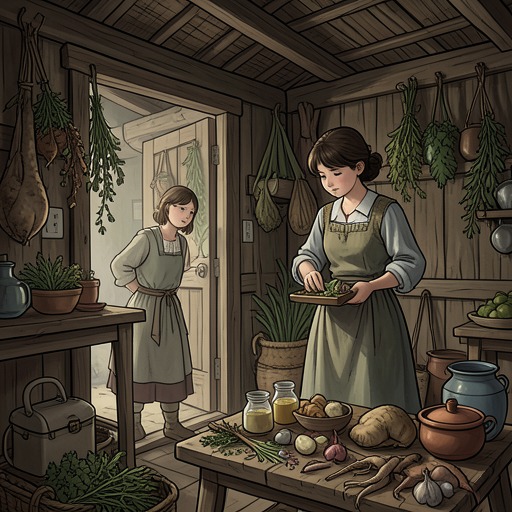
Her home is a two-room dugout filled with dried plants, colored stones, animals, and pots containing small creatures. Cauldrons hang over a central fire, and her supplies include powders she makes by grinding and mixing ingredients in a mortar. The boy tends the fire, gathers sticks from the forest, cleans the animals’ stalls, and helps prepare the powders. The work binds him to the rhythms of the household: gathering, tending, mixing, and keeping the fire alive are not incidental chores but part of the practical setting in which Olga’s healing takes place.
Healing Work and Village Authority
At daybreak, Olga takes the boy with her to village homes where sick people are waiting. Her methods vary with the complaint. She has him massage a woman’s abdomen while she performs gestures and speaks words over the patient. In a severe case involving a child’s injured leg, she uses a heated instrument and applies a dressing made with wet bread and other materials. Elsewhere she treats ear pain with a procedure involving heated cloth and follows it with an ointment made from household ingredients. She also removes growths and decayed teeth, retaining some materials from her treatments for later medicinal use. These practices are described as specific tasks, not as a single general remedy: Olga responds to different ailments with a working repertoire of preparations and procedures.
Her work extends beyond illness into the everyday decisions of village life. People ask her to protect cattle from malicious spells before they are driven to market. She teaches them to spit three times when buying a pig and to give a heifer specially prepared bread containing a sanctified herb before mating. A horse or cow may not be bought until Olga has judged that it will remain healthy. To make that judgment, she pours water over the animal and observes how it shakes itself; her verdict can determine both the price and whether a sale goes ahead. Her authority therefore rests not only on treating the sick but also on advising neighbors at moments when health, livelihood, and customary ritual meet.
Belief, Instruction, and the Boy
Olga and the boy speak in different dialects, yet they come to understand one another. During winter storms, when snow makes travel difficult, they sit together in the warm dugout and she tells him about God’s children and Satan’s spirits. This instruction gives their relationship a teaching dimension, but it also places the boy inside a frightening explanation of himself. Olga calls him Black One and tells him that an evil spirit lives within him, recognizable, she believes, by his dark, bewitched eyes. In her account, such eyes can cast spells without their owner knowing it, though they can also help remove illness if the person’s attention is properly directed.
Olga’s beliefs shape rules for conduct. The boy is warned to watch what he looks at and to keep his mind fixed on the illness he is trying to help remove. Olga also suspects that he might be a vampire and gives him a bitter daily drink with charcoal to restrain what she regards as his dangerous nature. These lessons make his identity in her household double-edged: he is a child she has taken in and trained, but also someone she regards as a possible source of harm. The narrative presents these ideas through Olga’s explanations and the boy’s experience of them; they organize her world without establishing that the supernatural causes she names are real.
Ritual Protection and the Epidemic
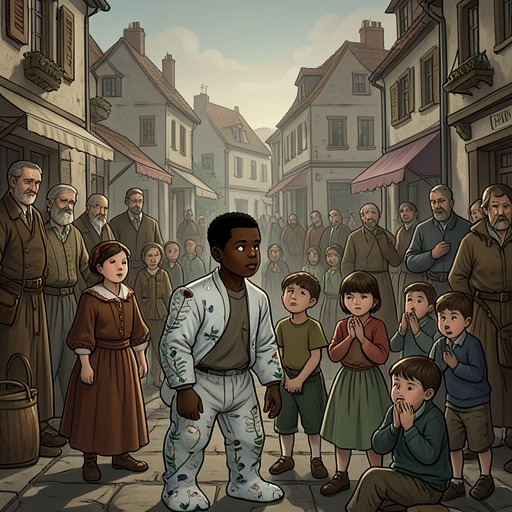
Olga’s standing is visible in the contrast between the villagers’ fear of the boy and their deference to her. When he walks alone, people may cross themselves, pregnant women may flee, and some villagers set dogs on him. When he accompanies Olga, however, he feels protected. Her presence gives him access to homes and patients that he could not safely approach by himself, while her reputation makes the villagers willing to follow her instructions about animals and illness.
That confidence is tested when a plague arrives with warmer weather. Olga and the boy travel from hut to hut, and she has him look at patients in an attempt to drive out the sickness. The disease proves stronger than her familiar methods: people continue to die, and the treatment does not stop the epidemic. When the boy himself becomes ill, Olga acts quickly. She takes him to a remote field, digs a pit, places him in the earth, and makes three smoky peat fires nearby. He loses awareness; after the episode, Olga says that the cold earth has driven the illness out of him. She explains his survival through another supernatural account, claiming that ghosts in the form of ravens tested his blood and left him alive. The boy’s recovery is real within the story, while Olga’s explanation remains part of the belief system through which she interprets it.
Knowledge, Dependence, and Narrative Role
Olga’s teaching is not confined to spells or remedies. The boy remembers her saying that survival without human help depends on two kinds of knowledge: familiarity with plants, animals, poisons, and medicinal herbs, and possession of fire. She offers a concrete example of the latter in the Comet, a portable stove made from a perforated preserve can and a wire handle. Kept supplied with fuel and sparks, it can provide heat and cook food; its operation depends on how it is swung and what fuel is added. This practical instruction sits alongside Olga’s supernatural lessons, rather than replacing them. In her household, empirical attention to materials and inherited ritual explanations coexist.
Olga consequently becomes a central figure in the boy’s education in survival and in the fearful social world he inhabits. She gives him shelter, tasks, explanations, and a role beside her among the sick, while also teaching him to regard his own eyes and nature as dangerous. Her authority brings him protection, but it does not free him from the village’s suspicion or from her own anxiety about what he might be. The limits of her healing are also clear: she can command trust, improvise treatments, and make judgments on which villagers act, yet she cannot prevent the epidemic from taking lives. Her character holds these contrasts together—care and fear, practical skill and supernatural certainty, local authority and helplessness before disease—without resolving them into a simple portrait of either a fraud or an all-knowing healer.